Targets and achievements
Measuring our progress towards our sustainability goals is key for us as well as our stakeholders, to make sure we are moving forward to acheive our overall missions: improved patient outcomes, reduced total cost of care and a fair and sustainable value chain.
Below, you will find our key sustainability targets and a summary of our targets and acheivements. More information can be found in the latest Sustainability Report.

Key sustainability targets (by 2030)
-
–42 %
Reduced Scope 1 and 2 emissions as a percentage compared to the 2021 base year, market-based. Validated as science-based target by SBTi.
-
–52 %
Total Scope 3, category 1 emissions per SEK m gross profit (tCO2e/SEK m). Validated as science-based target by SBTi.
-
>95 %
Percentage of employees who have participated in e-learning on Asker's Code of Conduct.
-
>90 %
Percentage of suppliers, based on purchase value, who have signed Asker’s Code of Conduct or an equivalent code.
-
>90 %
Percentage of Group companies that report on customer satisfaction, in relation to group sales.
All targets and achievements
| ESRS topic | Key performance indicator | Metric | Result 2024 | Result 2025 | Target 2030 |
|---|---|---|---|---|---|
| E1 Climate change | Share of renewable energy | % | 33% | 33% | >90% |
| Change in Scope 1 and 2 greenhouse gas emissions (market-based) compared to 2021 | % | –13% | –22% | –42% | |
| Change in Scope 3, category 1 greenhouse gas emissions, per SEK m gross profit (tCO2e SEK m) compared to 2021 | % | –38% | –40% | –51,6% | |
| S1 Own workforce | Employee satisfaction | 75 | 76 | >70 | |
| Employee turnover (voluntary) | % | 13% | 13% | <15% | |
| Sick-leave | % | 6,0% | 6,6% | <4% | |
| Number of accidents | 49 | 43 | 0 | ||
| Work-related fatalities | 0 | 0 | 0 | ||
| Share of employees who received training in health and safety | % | 98% | 97% | 100% | |
| Share of employees who received career or skills development | % | 87% | 68% | 100% | |
| Share of employees with regular performance and career progression plans | % | 98% | 96% | 100% | |
| Average number of training hours per employee (1) | 1,62 | 2,85 | >3 | ||
| Share of the under-represented gender on the Board | % | 33% | 33% | >40% | |
| Share of the under-represented gender in the Group Management Team | % | 44% | 44% | >40% | |
| Difference in basic salary and compensation between women and men at manager level | % | 19,8% | 24,3% | 0% | |
| Difference in basic salary and compensation between women and men for all employees | % | 4,3% | 3,1% | 0% | |
| S2 Workers in the value chain | Share of third-party manufacturers audited against workers’ rights criteria in the last 24 months | % | 95% | 94% | >90% |
| Share of suppliers who have signed Asker’s Supplier Code of Conduct or an equivalent code | % | 47% | 60% | >70% | |
| Share of suppliers, based on purchase value, who have signed Asker’s Supplier Code of Conduct or an equivalent code | % | 85% | 85% | >90% | |
| S4 Personal safety of consumers/end-users | Share of companies that measure customer satisfaction, in relation to Group sales | % | 62% | 90% | >90% |
| Product-related incidents, vigilance reports, warnings or recalls received and processed | 143 | 374 | <100 | ||
| Complaints and negative product feedback received per million products sold for distributors (2) | CPM | 6.96 | 7.31 | <1 | |
| Complaints and negative product feedback received per million products sold for manufacturers (3) | CPM | 0.74 | 0.59 | <1 | |
| Inspections by national regulators that have led to business interruption | 0 | 1 | <1 | ||
| Incidents that have led to fines, sanctions or warnings related to defective products or incorrect advice | 1 | 0 | <1 | ||
| Share of the Group’s sales covered by ISO 9001 | % | 72% | 72% | >85% | |
| Share of the Group’s sales covered by ISO 13485 | % | 22% | 42% | >35% | |
| Share of the Group’s sales covered by ISO 14001 | % | 27% | 30% | >40% | |
| Share of the Group’s sales covered by ISO 45001 | % | 20% | 17% | >30% | |
| Share of the Group’s sales covered by ISO 9001 or ISO 13485 for distributors (2) or importers (4) | % | 91% | 97% | >95% | |
| Share of the Group’s sales covered by ISO 9001 or ISO 13485 for manufacturers (3) | % | 100% | 100% | 100% | |
| G1 Business conduct | Share of employees who have participated in Asker's Code of Conduct e-learning | % | 87% | 92% | >95% |
| 1) Includes only the digital courses provided at Group level. | |||||
| 2) Distributor: An entity, other than a manufacturer or importer, that makes a product available on the market in the EU/EEA. | |||||
| 3) Manufacturer: An entity that places its name and/or brand on product in accordance with the MDR. | |||||
| 4) Importer: An entity established in the EU/EEA, that brings in products from manufacturers outside the EU/EEA, and releases these products on the market inside the EU/EEA. | |||||
Read more about sustainability reporting

Find our Sustainability Reports
Our Sustainability Reports provide an overview of Asker’s governance and performance related to material sustainability topics, including detailed metrics and targets.
Science-based targets
Our emissions reduction targets has been validated as science-based by the Science Based Target initiative (SBTi).
MSCI ESG rating
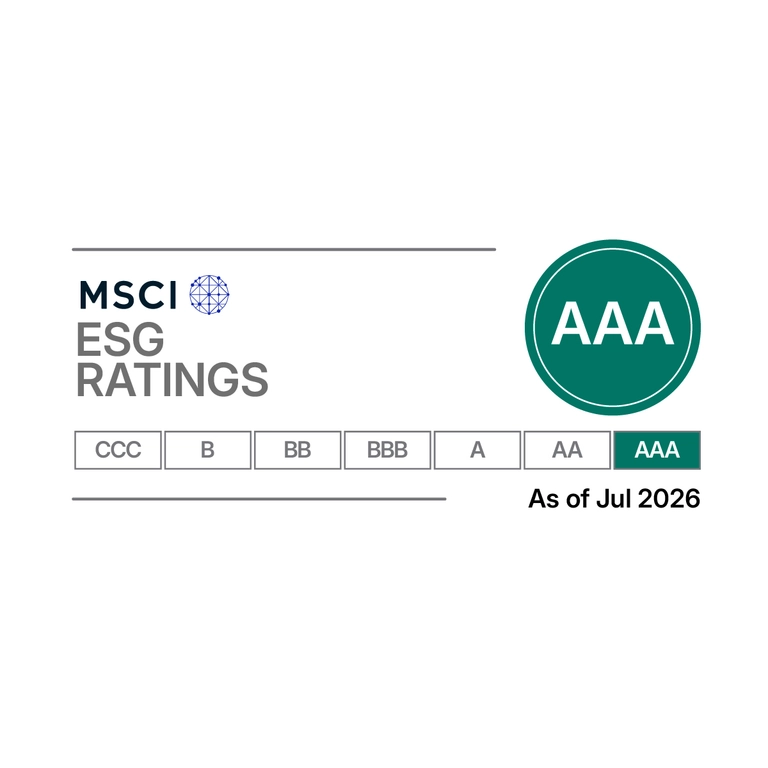
Asker has received an AAA ESG rating from MSCI 2026, the highest rating on MSCI’s ESG scale.